All you want to know about us
Click here to share this article
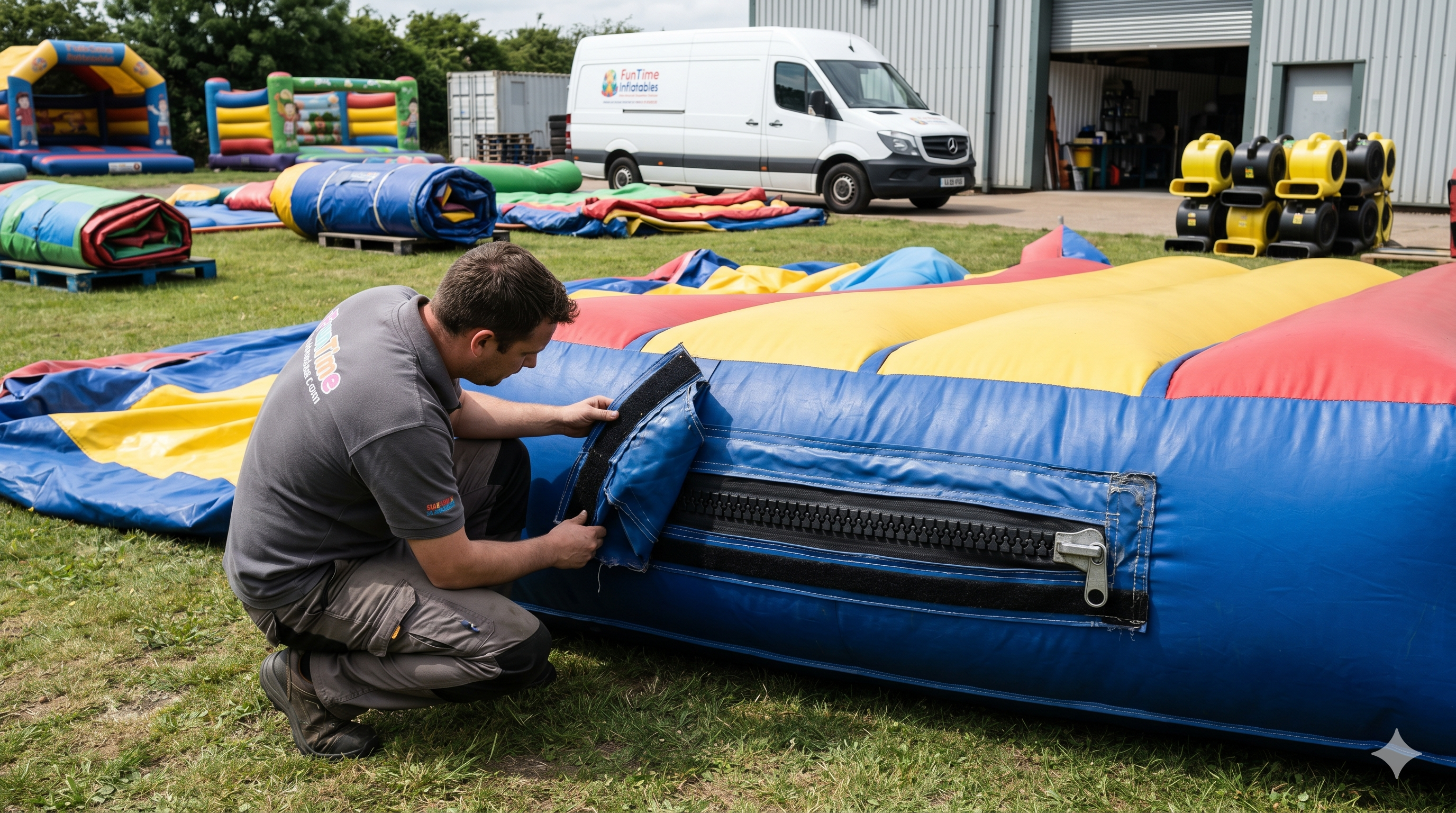
When managing a fleet of commercial inflatables, preserving optimal air pressure is paramount for both user safety and structural integrity. At the heart of this operational necessity lies a frequently overlooked but strictly critical component: the bouncy castle zip. We recognize that a high-quality, perfectly functioning deflation zipper dictates the efficiency of your setup and teardown processes, while simultaneously safeguarding your business against catastrophic mid-event deflation. In this comprehensive guide, we systematically dissect everything you must know to maintain, troubleshoot, and upgrade your bouncy castle zips to ensure maximum longevity and uncompromising performance.
Understanding the Anatomy of a Commercial Bouncy Castle Zip
To effectively manage inflatable assets, we must first understand the robust engineering behind a commercial-grade bouncy castle zip. Unlike standard apparel zippers, inflatable zippers endure immense pneumatic pressure, harsh environmental elements, and repetitive, forceful manipulation.
Typically, the most reliable inflatables utilize a Number 10 or Number 15 heavy-duty molded plastic zipper. The teeth are predominantly manufactured from polyacetal resin, a high-strength thermoplastic engineered for dimensional stability and resistance to intense friction. The zipper tape surrounding these teeth must be woven from heavy-duty polyester, designed to resist tearing under high tensile loads. Furthermore, the slider, often the most vulnerable point, should be constructed from corrosion-resistant stainless steel or highly durable die-cast zinc alloys to withstand constant exposure to moisture and physical impact. We exclusively recommend continuous chain configurations equipped with double-sided pulls, allowing operators seamless access from both the interior and exterior of the inflatable structure.
Identifying Key Indicators of Bouncy Castle Zip Failure
Proactive detection of bouncy castle zip degradation prevents unexpected operational downtime. We advise conducting rigorous inspections before and after every single deployment. You must actively monitor for the following critical signs of structural compromise:
Audible Air Leakage: A highly pronounced hissing sound emanating directly from the zipper casing indicates that the interlocking teeth are failing to create an airtight seal, or the protective velcro flap has lost its adhesive properties.
Slider Separation: If the zipper slider moves along the track but leaves the teeth unmeshed behind it, the internal mechanism of the slider has permanently widened and requires immediate replacement.
Missing or Mangled Teeth: A visual inspection revealing sheared, bent, or entirely missing polyacetal teeth means the entire zipper track is compromised. A zipper in this state poses a severe deflation hazard.
Deteriorating Stitching: The polyester thread binding the zipper tape to the PVC vinyl fabric of the bouncy castle is highly susceptible to UV degradation and abrasion. Frayed or snapped threads necessitate immediate reinforcement.
Canvas Tearing at the Base: The point where the bottom of the bouncy castle zip meets the primary inflatable fabric experiences maximum stress. Micro-tears in the PVC canvas adjacent to the zipper track demand structural patching.
Selecting the Optimal Replacement Bouncy Castle Zip
When sourcing a replacement bouncy castle zip, compromising on material quality is a severe operational error. We mandate the selection of commercial-grade, marine-quality zippers tailored specifically for heavy-duty inflatable applications.
First, accurately measure the precise length of the existing zipper aperture. We recommend purchasing a continuous chain zipper roll, which allows you to cut the exact required length, effectively minimizing waste and ensuring a perfect fit regardless of the specific inflatable model. The replacement must feature UV-treated polyester tape to prevent sun rot over extended summer deployments.
Additionally, you must ensure you acquire compatible heavy-duty sliders with auto-lock mechanisms. An auto-lock slider prevents the intense internal air pressure of the bouncy castle from inadvertently forcing the zipper open during active bouncing. Finally, consider the integration of a weatherproof overlay. High-quality replacement systems will incorporate a thick PVC protective flap secured by premium hook and loop fasteners (commonly known as Velcro) to completely seal the zipper mechanism from dirt, rain, and direct foot traffic.
A Comprehensive Guide to Sewing and Replacing a Bouncy Castle Zip
Replacing a compromised bouncy castle zip requires industrial-grade tools and meticulous execution. We detail the definitive process for executing a flawless replacement that rivals factory original specifications.
Phase 1: Extraction and Surface Preparation
Begin by safely deflating the structure entirely. Using an industrial seam ripper, meticulously sever the existing threads binding the compromised zipper to the PVC canvas. Extreme caution is required to avoid puncturing or scoring the surrounding healthy fabric. Once the old zipper is removed, use a specialized vinyl adhesive solvent to thoroughly clean the bonding perimeter, removing any residual glue, dirt, or degraded thread fragments.
Phase 2: Alignment and Basting
Cut your new heavy-duty zipper precisely to length, ensuring a minimum overlap of two inches at both the superior and inferior terminals. We strongly advise utilizing double-sided seam tape to temporarily baste the zipper tape to the PVC fabric. This critical step ensures absolute alignment and prevents fabric shifting during the high-speed mechanical sewing process.
Phase 3: Industrial Sewing Execution
Standard household sewing machines are fundamentally incapable of penetrating commercial inflatable fabrics. You must utilize an industrial walking-foot sewing machine equipped with a size 22 or 24 heavy-duty leather needle. Thread the machine strictly with bonded nylon thread (specifically size 69 or 92), known for its exceptional resistance to abrasion, mildew, and UV radiation.
Execute a double stitch or triple stitch pattern along the entire perimeter of the zipper tape. Maintain a high stitch density—we recommend approximately four to five stitches per inch to guarantee maximum structural anchorage. Ensure that you heavily backtack at the stress points located at the very top and bottom of the zipper track to prevent future catastrophic blowouts.
Phase 4: Seam Sealing and Curing
Once the sewing phase is complete, the perforations created by the needle compromise the airtight integrity of the PVC vinyl. We mandate the application of a commercial-grade liquid vinyl cement or liquid urethane sealant over all newly created stitch lines. Allow the sealant to cure uninterrupted for a minimum of 24 hours in a climate-controlled environment before subjecting the inflatable to operational air pressure.
Implementing Rigorous Preventative Maintenance Protocols
To maximize the return on investment for your inflatable fleet, we champion a proactive, aggressive maintenance schedule for every bouncy castle zip. Neglect is the primary catalyst for mechanical failure.
After every deployment, operators must utilize a stiff-bristled utility brush to aggressively dislodge sand, dirt, and microscopic particulate matter deeply embedded between the zipper teeth. These granular abrasives act like sandpaper, rapidly degrading the polyacetal resin during inflation and deflation cycles.
Following the mechanical cleaning, we require the regular application of a high-quality silicone-based zipper lubricant. Silicone lubricants effectively repel water, prevent dirt adhesion, and drastically reduce the friction coefficient of the metal slider. Absolutely avoid utilizing petroleum-based oils or greases (such as standard WD-40), as these hostile chemical compounds will aggressively dissolve the protective coatings on the polyester tape and attract excessive environmental debris. Apply the silicone sparingly to both the interior and exterior tracks, actuating the slider repeatedly to ensure even, comprehensive distribution.
Furthermore, operational training is vital. We instruct all setup crews to physically pull the structural fabric together before attempting to close the deflation zip. Relying exclusively on the zipper slider to force the taut fabric closed subjects the internal components to catastrophic, unsustainable tension.
Safety Compliance and the Structural Integrity of the Zip
We cannot overstate the correlation between a flawless bouncy castle zip and strict adherence to global safety standards, including the rigorous EN14960 compliance regulations. The zipper functions not only as an operational convenience but as a highly critical structural anchor.
A sudden, high-pressure rupture of a degraded deflation zip results in immediate, rapid loss of atmospheric pressure. This failure can cause the heavy structural walls of the bouncy castle to collapse inward upon occupants, creating a severe entrapment and suffocation hazard. Therefore, the protective velcro zipper cover flap must be maintained with equal diligence. This flap acts as the primary barrier against accidental manipulation by unauthorized users and heavily buffers the airtight seal against sudden spikes in internal pressure caused by intense jumping. If the hook and loop fasteners on the flap become clogged with lint or lose their tensile grip, they must be meticulously cleaned or aggressively replaced.
Troubleshooting Persistent Bouncy Castle Zip Complications
Even with immaculate maintenance, real-world operational challenges will inevitably arise. We provide definitive solutions for the most common mechanical faults.
If a bouncy castle zip slider becomes completely jammed, extreme force must never be applied. Instead, closely inspect the obstruction. Often, a small fold of the internal PVC baffling or external protective flap has become caught within the mechanical housing. We advise applying a generous coating of liquid dish soap directly to the point of entrapment to act as an emergency friction reducer, then gently manipulating the fabric away from the slider's internal cam.
If the zipper teeth mysteriously pop open behind the actively moving slider, the internal clamping mechanism of the slider itself has failed. While temporary field repairs can sometimes be achieved by gently crimping the top and bottom plates of the metal slider closer together using heavy-duty pliers, we categorize this strictly as an emergency, stop-gap measure. The compromised slider must be professionally replaced before the inflatable is permitted to re-enter commercial circulation.
Maximizing Longevity Through Superior Care
In conclusion, maintaining a flawless operational standard for your inflatables requires a granular focus on component health. By aggressively sourcing marine-grade materials, adhering strictly to industrial sewing protocols, and executing relentless preventative maintenance, we ensure that every bouncy castle zip in your inventory consistently performs under extreme stress. Protecting these critical access points fundamentally guarantees uninterrupted revenue generation, vastly extends the operational lifespan of your heavy PVC inflatables, and firmly establishes an uncompromising foundation for user safety.