All you want to know about us
Click here to share this article
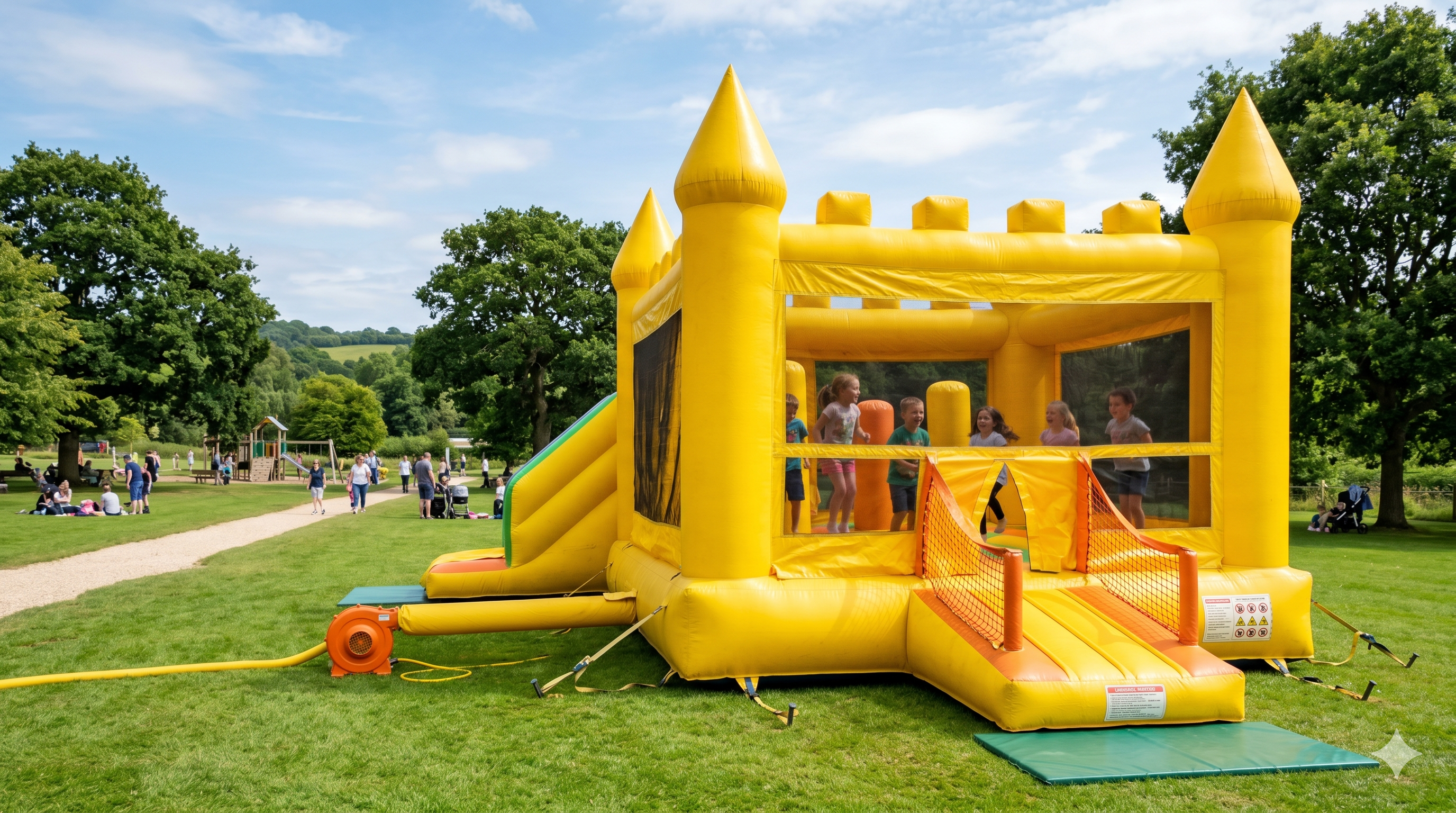
When orchestrating a high-tier outdoor event, the inclusion of a yellow bouncy castle stands as a paramount logistical and aesthetic decision. We recognize that procuring the optimal inflatable structure requires a meticulous evaluation of material science, structural engineering, and safety compliance. This definitive guide delineates the critical specifications required to select, maintain, and operate a top-tier yellow inflatable bounce house, ensuring maximum longevity and user safety for both private and commercial applications.
Aesthetic Brilliance and Thematic Versatility of the Yellow Bouncy Castle
The deployment of a vibrant yellow bouncy castle offers distinct psychological and visual advantages for event planners. Yellow serves as a high-visibility, luminescent hue that instantly establishes a focal point within any landscape architecture. Unlike darker colors that absorb solar radiation and significantly increase the internal temperature of the inflatable, a yellow vinyl surface reflects a substantial portion of the sun's ultraviolet (UV) rays. This inherent thermal regulation ensures the bouncing surface remains comfortable and safe for bare skin during peak afternoon hours. Furthermore, the color yellow provides unparalleled thematic flexibility, seamlessly integrating into tropical, construction, safari, and gender-neutral event designs.
Commercial-Grade Material Specifications and Vinyl Weights
To achieve maximum durability, we mandate the use of heavy-duty PVC (Polyvinyl Chloride) vinyl. Inferior consumer-grade inflatables rely on woven nylon or oxford cloth, which rapidly degrade under mechanical stress. A premium commercial yellow bouncy castle must be fabricated from 15-ounce to 18-ounce PVC coated vinyl. This industrial-grade textile offers exceptional resistance to puncture, tearing, and abrasion. Furthermore, the vinyl must feature an integrated UV-resistant topcoat to prevent the yellow pigmentation from fading, chalking, or degrading after prolonged exposure to direct sunlight. The incorporation of lead-free and fire-retardant chemical treatments into the PVC matrix is non-negotiable for strict compliance with modern health and safety regulations.
Structural Engineering and Advanced Seam Integrity
The structural integrity of a yellow bounce house is entirely dependent on its manufacturing techniques, specifically its stitching architecture. We require double stitching across all standard panels, while high-stress zones—such as the base mattress, entryway, and pillar joints—must feature quadruple stitching utilizing high-tensile, bonded nylon or polyester thread. To prevent thread unraveling and structural failure, manufacturers must employ heat-welded seams in addition to physical stitching. This dual-layer reinforcement creates an airtight, waterproof seal that significantly reduces the required workload on the air blower, maintaining optimal internal pressure even after years of rigorous physical deployment.
Stringent Safety Protocols and Anchoring Mechanics
Operating a yellow bouncy castle necessitates uncompromising adherence to ASTM F2374-10 standards for inflatable amusement devices. The most critical aspect of operational safety is the anchoring system. We stipulate the use of heavy-duty, stainless steel D-rings integrated into the base framework. During outdoor deployments on soil or turf, the structure must be secured using 18-inch to 24-inch forged steel ground stakes, driven at a 45-degree angle. For indoor operations or hardscape deployments (concrete, asphalt), each anchor point must be counterweighted with heavy-duty sandbags, strictly adhering to the manufacturer's specified weight per anchor point. Operations must cease immediately if sustained wind speeds exceed 15 miles per hour (24 km/h) to prevent catastrophic uplift and displacement.
Additionally, the inclusion of finger-safe, fine-mesh safety netting surrounding the bouncing perimeter is essential. This structural netting provides optimal ventilation while preventing accidental ejections from the play area. A dedicated safety ramp or entry step constructed of impact-absorbing material must also be integrated into the primary entryway to mitigate trip hazards.
Blower Dynamics and Continuous Airflow Management
A yellow inflatable castle operates on a principle of continuous airflow. As users jump, air is forced out through the seams; therefore, a high-efficiency centrifugal blower is required to maintain structural rigidity. For standard 13x13 foot or 15x15 foot models, we recommend a 1.0 HP to 2.0 HP commercial air blower capable of generating high CFM (Cubic Feet per Minute) and high static pressure. The inflation tube must feature a secure nylon tie-down strap to prevent accidental disconnection. Premium models also integrate specialized deflation zippers covered by Velcro flaps, allowing operators to rapidly exhaust internal air pressure for efficient rolling and striking of the unit at the conclusion of the event.
Capacity Optimization and Dimensional Analysis
Selecting the correct dimensions for a yellow bouncy castle requires analyzing the anticipated user demographic and the available deployment footprint. A standard 13-foot by 13-foot bouncy castle requires a minimum operational clearance footprint of 18 feet by 18 feet to accommodate the blower apparatus, safety mats, and perimeter access. Capacity management is dictated by gross weight limits and user height differentials. We strictly advise against mixing disparate age groups simultaneously. A standard commercial unit typically supports a gross weight capacity of 800 to 1000 pounds, accommodating approximately 6 to 8 elementary-aged children or 4 to 5 adults, depending on the specific baffle engineering of the inflatable floor.
Rigorous Maintenance and Mold Prevention Tactics
To protect the financial investment and extend the lifecycle of a commercial yellow bouncy castle, operators must implement a rigorous sanitation and maintenance protocol. Following every deployment, the unit must be meticulously inspected for micro-punctures or seam stress. Cleaning requires the application of non-toxic, enzymatic vinyl cleaners that lift organic debris and oils without stripping the PVC's UV-resistant coating.
Moisture management is the most critical factor in maintenance. If the yellow inflatable is exposed to precipitation or high humidity, it must be fully inflated in a dry environment and allowed to completely air-dry before being rolled for storage. The introduction of mildewcide treatments may be necessary in humid climates to prevent dark fungal staining, which visually degrades the vibrant yellow aesthetic. The unit must be stored in a heavy-duty PVC transport bag, elevated off concrete floors, and kept in a climate-controlled environment to prevent extreme temperature fluctuations from embrittling the vinyl.
Profitability and Return on Investment for the Rental Sector
For party rental enterprises, the acquisition of a commercial-grade yellow bouncy castle represents a high-yield asset with an accelerated return on investment (ROI). Because yellow appeals universally to both boys' and girls' events, its rental velocity frequently outpaces highly specific, character-themed inflatables. By ensuring the unit strictly adheres to the commercial specifications detailed above, rental businesses minimize downtime caused by repairs and maximize weekend deployment schedules. Proper implementation of digital liability waivers, strict adherence to weight capacity limitations, and rigorous execution of the aforementioned anchoring protocols directly insulate the operating business from liability, ensuring long-term profitability and an unblemished safety record within the events industry.