All you want to know about us
Click here to share this article
When we evaluate the landscape of modern event entertainment and party rentals, the demand for highly immersive, thematic experiences stands at the forefront of the industry. Among the most striking and profitable innovations in this sector is the zombie bouncy castle. Far from the standard, brightly colored primary-shape inflatables of the past, the undead-themed bounce house represents a pinnacle in specialized event attractions. We recognize that securing a premium commercial zombie inflatable can dramatically transform the atmosphere of an event, driving engagement, maximizing rental ROI, and providing unparalleled entertainment value.
In this comprehensive analysis, we will deconstruct the engineering, design, operational logistics, and commercial viability of the zombie bouncy castle, providing the definitive blueprint for event organizers and rental fleet operators looking to capitalize on this thrilling attraction.
Striking Visual Architecture and Immersive Zombie Design
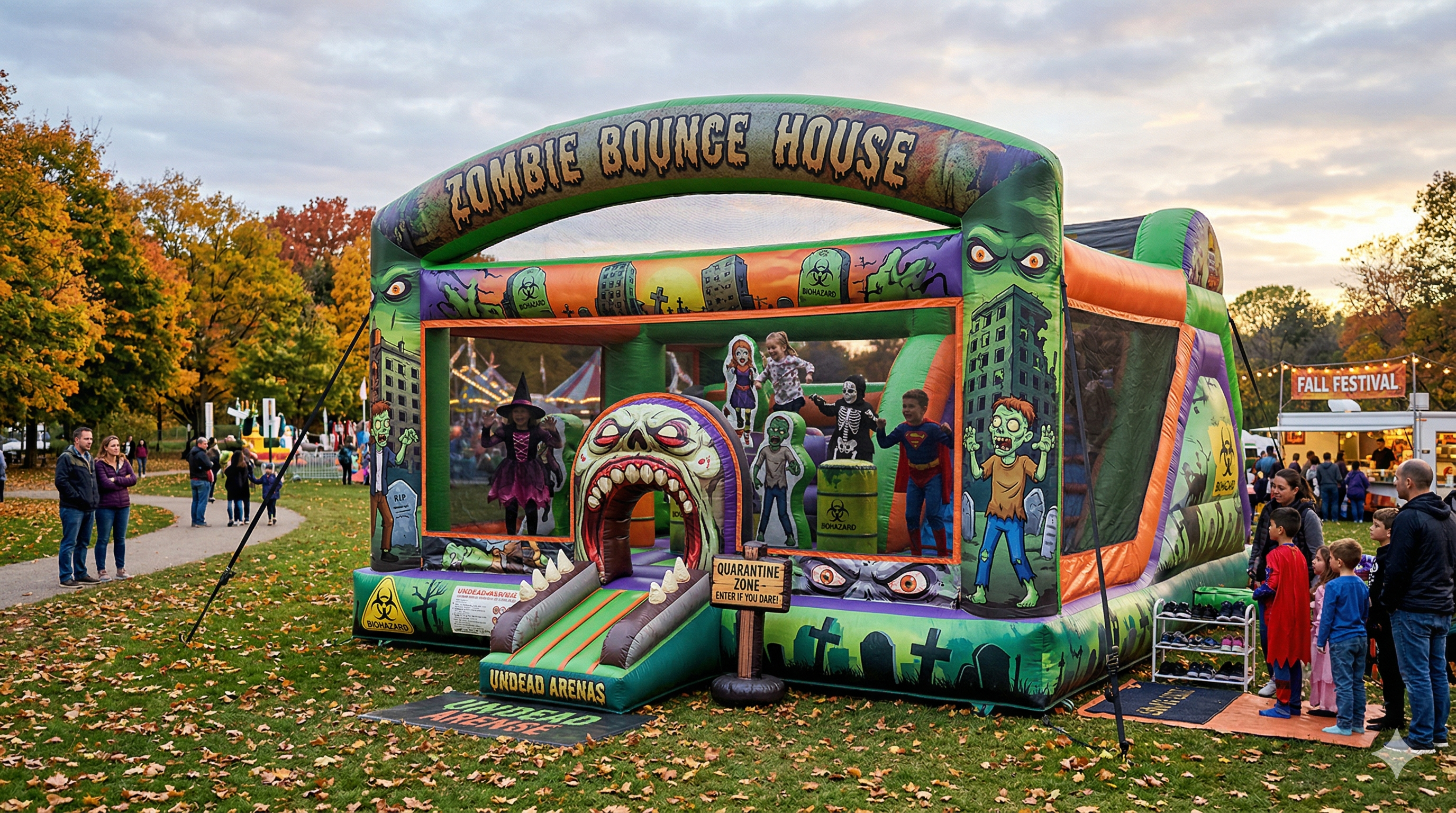
The visual impact of a zombie bouncy castle relies entirely on its highly detailed, custom-engineered aesthetic. We observe that top-tier horror-themed inflatables utilize high-resolution digital printing technologies to create highly immersive, post-apocalyptic landscapes. The exterior walls frequently feature hyper-realistic depictions of abandoned biohazard zones, shattered cityscapes, and quarantine warning signs.
The color palette is intentionally ominous, leaning heavily into toxic neon greens, deep crimson reds, and asphalt grays. However, the true centerpiece of a premium zombie bounce house is the inclusion of 3D inflatable pop-ups. Inside the jumping arena, participants navigate around towering, structurally integrated inflatable zombies, toxic waste barrels, and tombstones. These three-dimensional elements are seamlessly welded into the floor of the jumping castle, providing both tactile obstacles for users and an enhanced, terrifying aesthetic that resonates perfectly with Halloween enthusiasts and fans of the horror genre.
Commercial-Grade Materials and Structural Engineering
When we source or deploy a commercial zombie bouncy castle, structural integrity is paramount. Unlike residential-grade nylon inflatables, a professional undead jumping castle must be manufactured using 15-ounce to 18-ounce heavy-duty PVC vinyl. This industrial-grade material is essential for withstanding the rigorous demands of high-traffic commercial use.
The manufacturing process must incorporate lead-free and fire-retardant vinyl to comply with stringent state and international safety regulations. We prioritize units that feature quadruple stitching at all high-stress points—particularly the entrance ramps, pillar bases, and internal baffle joints. The internal baffle system, constructed from robust vinyl webbing, dictates the shape of the inflatable and prevents the zombie bouncy castle from ballooning or losing its structural form under the weight of multiple active users. Furthermore, we ensure that high-friction areas, such as the bounce floor and slide surfaces, are reinforced with an additional layer of replaceable vinyl covers, extending the operational lifespan of the core inflatable structure.
Stringent Safety Protocols and User Protection Features
Safety dictates every aspect of how we operate a zombie bouncy castle. The thrilling, spooky exterior must be matched by uncompromising safety features. We mandate the use of finger-safe mesh netting on all external windows. This specialized netting allows for optimal parental supervision and essential airflow while strictly preventing small fingers from becoming entangled or injured.
The entrance to the horror bounce house must feature an extended, inflatable safety ramp accompanied by heavily padded entrance pillars to mitigate the risk of fall injuries as participants enter and exit the unit. Additionally, a premium zombie inflatable will feature a sunshade roof—often printed with eerie, stormy clouds or spiderwebs—which serves the dual purpose of maintaining the thematic illusion and protecting users from harmful UV exposure and excessively hot vinyl surfaces. Finally, we require strategically placed emergency deflation zippers covered by reinforced Velcro flaps, allowing for rapid deflation of the spooky jumping castle in the event of severe weather or an on-site emergency.
Optimal Venues and Event Integration Strategies
The application of a zombie bouncy castle extends far beyond traditional children’s birthday parties. We strategically deploy these units as anchor attractions for high-attendance, specialized events. During the autumn season, a Halloween bouncy castle becomes the cornerstone of pumpkin patches, trunk-or-treat gatherings, and community fall festivals.
Beyond seasonal applications, we utilize these spooky inflatables for horror movie conventions, zombie walk after-parties, and haunted house queue entertainment. By placing a zombie bounce house near the entrance of a haunted attraction, operators provide active entertainment for patrons waiting in line, significantly improving overall customer satisfaction. Because these commercial units are engineered to support higher weight capacities, they are also highly effective at corporate team-building retreats and college campus events, catering to teenagers and adults who seek a nostalgic yet adrenaline-fueled experience.
Power Logistics and Site Preparation Requirements
Deploying a zombie bouncy castle requires meticulous site planning and precise power management. These heavy-duty inflatables generally weigh between 300 and 600 pounds, necessitating the use of specialized heavy-duty appliance dollies and a trained crew for safe transport. Prior to unrolling the unit, we mandate a thorough site inspection to clear the footprint of any sharp debris, rocks, or abrasive surfaces.
We always utilize an industrial ground tarp to protect the underside of the zombie inflatable from friction and ground moisture. Powering the unit requires a constant airflow blower, typically a 1.5 HP to 2.0 HP commercial blower. It is critical that we secure a dedicated 20-amp electrical circuit for each blower utilized. Overloading circuits or utilizing extension cords longer than 50 feet (or lower than 12-gauge wire) can result in voltage drops, damaging the blower motor and compromising the inflation pressure of the zombie jumper.
Robust Anchoring and Weather Monitoring Systems
Securing the zombie bouncy castle to the ground is a non-negotiable step in our setup protocol. Wind is the single greatest hazard to any inflatable attraction. We utilize heavy-duty, welded steel D-rings strategically integrated into the base of the inflatable. When setting up on grass, we drive 18-inch to 36-inch steel anchoring stakes through these D-rings at a 45-degree angle to maximize holding power.
When deployment occurs on hard surfaces such as asphalt, concrete, or indoor gymnasium floors, traditional staking is impossible. In these scenarios, we must rely on high-capacity sandbag anchoring systems. Each anchor point on the zombie bounce house must be secured with a minimum of 50 to 75 pounds of ballast. Furthermore, we actively monitor local weather conditions using digital anemometers. If sustained winds or gusts exceed 15 to 20 miles per hour, we immediately evacuate participants and initiate the emergency deflation sequence to ensure absolute safety.
Advanced Maintenance, Cleaning, and Preservation
To protect our investment and ensure a pristine user experience, we adhere to a rigorous maintenance schedule for the zombie bouncy castle. The ironically "decaying" aesthetic of the zombie theme must never mask actual dirt or poor hygiene. After every rental deployment, we conduct a thorough internal sweep using industrial shop vacuums to remove loose debris, grass, and dirt.
We then execute a deep-cleaning protocol utilizing vinyl-safe, hospital-grade disinfectants to sanitize all high-touch surfaces, including the jump floor, entrance ramps, and 3D pop-up obstacles. It is absolutely vital that the zombie inflatable is completely dry before it is rolled and stored. Rolling a damp inflatable creates a breeding ground for mold and mildew, which will permanently stain the vinyl and degrade the stitching. If the unit is exposed to rain during an event, we inflate it in a controlled environment the following day, utilizing air movers and towels to ensure every baffle and seam is entirely devoid of moisture.
Return on Investment and Rental Fleet Economics
From a business perspective, integrating a zombie bouncy castle into a rental fleet offers exceptional economic advantages. While the initial capital expenditure for a premium, custom-printed commercial zombie inflatable may be slightly higher than a standard primary-colored castle, the rental yield is significantly amplified.
During the lucrative September and October seasons, we observe that Halloween-themed inflatables command a premium rental rate, often 20% to 40% higher than standard units. The highly specific theming creates a sense of scarcity and high demand among event planners looking for unique attractions. By marketing the zombie jump house aggressively to municipal event planners, haunted attraction owners, and corporate event coordinators, we can achieve rapid capitalization, often recuperating the entire purchase cost within a single Halloween season. The zombie bouncy castle is not merely a piece of entertainment equipment; it is a highly specialized, high-yield asset that defines the cutting edge of the interactive event industry.